Introduction
When distance separates us from those we love, it’s easy to take for granted the ways we can stay connected with one another. As a current college student, I know I am a click away from hearing a cherished voice, whether through telephone calls or virtual video meetings.
Before the 1960s, however, it was much harder to experience this luxury. While telegrams and letters were always an option, telephone calls were costly over one hundred years ago. Was there a less expensive way to send a message to those back at home using one’s own voice?
Today, I’m diving into one of the least discussed forms of communication media dubbed “Voice in the Mail” and how this unique medium was the precursor to a new way of staying connected.
“Voice in the Mail,” also called audio letters or phono-posts, were messages recorded around the world onto small records for people to send back to close friends and relationships. Booths dedicated to this purpose were often found at carnivals, and a program was set up for military soldiers. Non-military users were charged $0.50 or more for a few minutes of recording time.
After paying, users would speak into a microphone, sharing information with the recipient much like a traditional letter would. Meanwhile, the machine cut the audio message into the record, which was made of a wide range of materials ranging from aluminium to variations of vinyl. Time limits were strict, so keeping an eye on the clock was a must.
When the payment’s worth of time was recorded, users received a new record and in some cases a small envelope to send it like a normal letter.
While it might seem strange to us today to use this type of technology, the beauty of “Voice in the Mail” was its accessibility to a wide portion of the population.
First, telephone calls, often expensive back in the 1940s, were only used by those with easy access to a phone and who had the money to spend on them. With audio letters, however, a message cost only around $0.50 to $0.75, a much better deal.
Secondly, homes across the world and especially in the United States had access to record players back then, leaving no cost standing between the receiver hearing and relishing the message from a loved one.
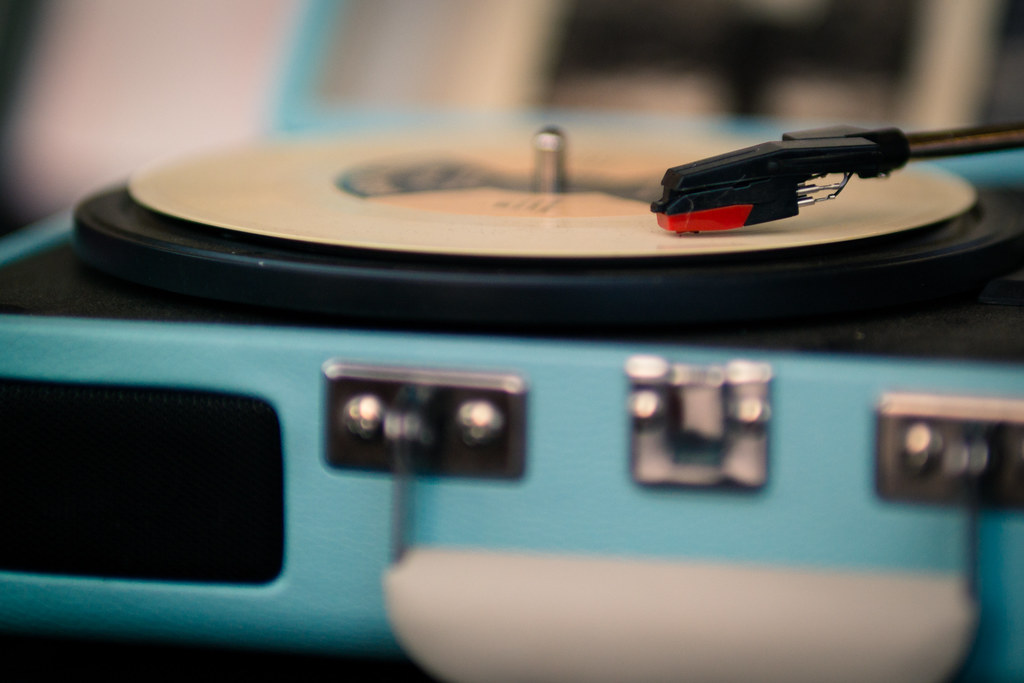
With many homes having access to record players, audio letters could be heard and treasured with ease.
“Vinyl Record Player” by nan palmero is licensed under CC BY 2.0.
Lastly, unlike letters, audio letters didn’t require literacy to be sent, allowing a large population to send personal messages to family members, lovers, and friends back at home in a way once impossible.
For these reasons, the popularity of this novel technology grew, leaving behind a rich record of life during this period.
Like messages sent today, there were many types of audio letters being sent via mail. One of the most popular ones were love letters, recordings of men and women discussing their love for one another from afar. Listen to some enduring love letters and other audio letters in the Phono-Post archive. My favorite is this letter, which can be accessed more directly through the Phono-Post Corpus of Early Audio Messaging archive.
Singing to their lovers and making plans for the future, couples utilized this new advancement to connect in a way that felt more personal than a letter or telegram but less costly than a telephone call. Interestingly, as these recorded messages would likely be played aloud within earshot of the entire family, lovers sometimes needed to change their wording to make it appropriate for the entire family.
Young couples used “Voice in the Mail” to share dreams and show their love.
“Uncle Robert, Lee High School, Columbus, circa 1947” by Patrick Q is licensed under CC BY-NC-ND 2.0.

Audio letters acted as a way for troops to speak with their family and for young individuals to send word back home of their travels. For instance, one letter is a recording of a soldier speaking with his girlfriend Julie about his time in Washington D.C. Another recording was made by a soldier from the UK speaking to his wife and son. This one features Betty and Dorothy, two women writing home while on an outing in Woodside Park, Pennsylvania.
Third, some users hoped to preserve their voices for the next generation as encouragement. For instance, this audio letter is a German couple speaking to their two young sons about their hopes for the future. Acting like a snapshot into the past, records for preservation have a subtle tinge of irony in an age that regards the medium obsolete.
Finally, there were messages recorded simply to experiment with this new way of communicating. For example, this letter stars a young couple trying to record a message but are laughing too much to get much of a message in. Like the invention of social media platforms and the Internet, the excitement at trying out something novel can be heard in several of these recordings.
Despite its impressive popularity in the decades after the Great Depression, “Voice in the Mail” was gradually replaced with newer technology. Tape recorders gained popularity in the 1960s, telephone calls became less expensive, and this unique way to reach loved ones slowly disappeared from public use and memory.
In fact, it is unlikely whether we would know about this medium at all if it weren’t for Thomas Levin, a professor at Princeton University and the unofficial mascot of the medium. While shopping at a flea market, Levin discovered an old “Voice in the Mail” and was fascinated to find that no research or historical record of this innovation had been created. Looking on Ebay and exploring more thrift stores, Levin slowly accumulated a collection of these deeply personal recordings and operates Phono-post.com, the only online archive preserving these pieces of the past.
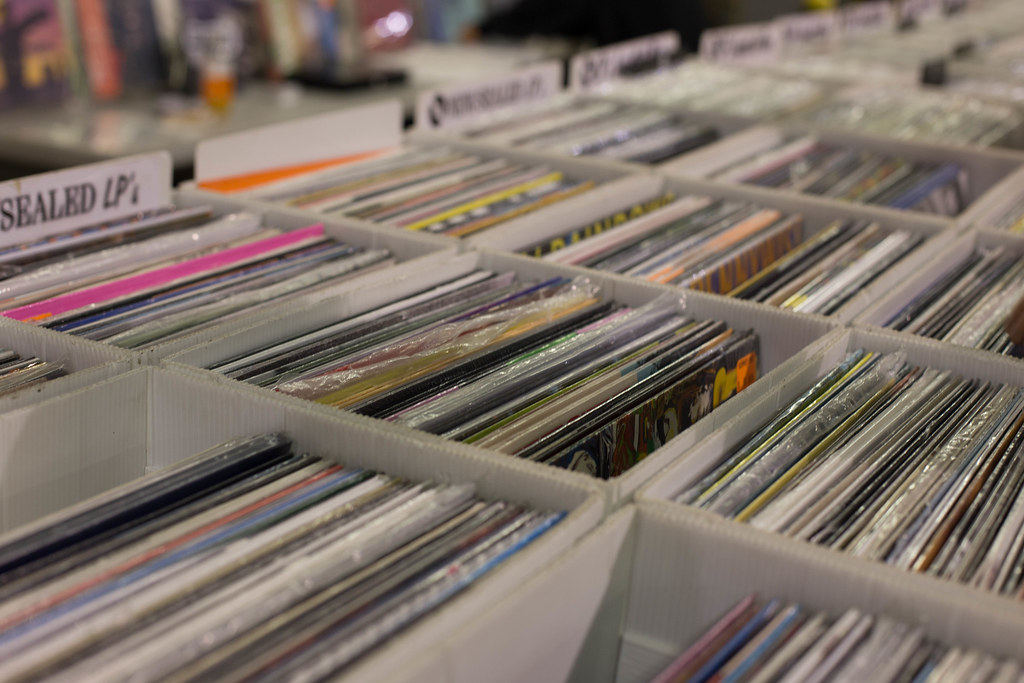
After discovering an old audio letter in a thrift store, Levin sought to collect and create an archive for this unique part of history.
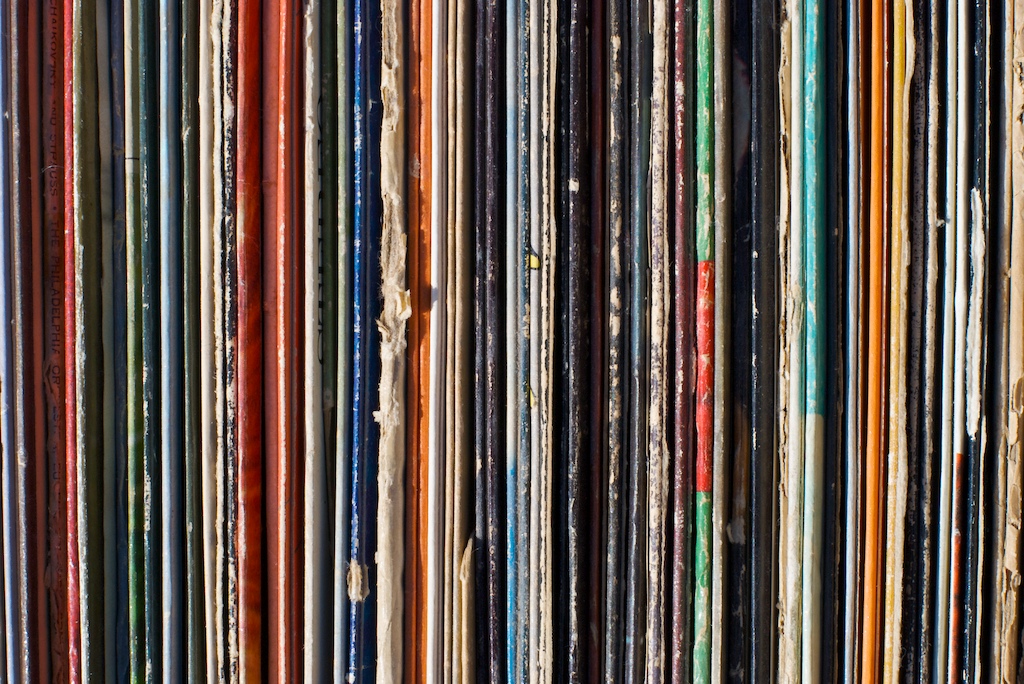
“Vinyl Records” by David Hilowitz is licensed under CC BY 2.0.
Levin is always on the lookout for new audio letters to include in his archive and offers anyone who allows him to purchase their own a digital copy of the recording for safekeeping. This way, family members and friends have access to their loved one’s voices, and Levin’s collection continues to benefit listeners from around the world.
Final Thoughts
Despite growing up with cell phones, video call software, social media, and text messages, I know it’s not difficult to imagine what it must have been like to receive an audio letter from a loved one far away, especially from a soldier during war time. From lovers sharing their emotions with loved ones and children “writing” home to tell their parents not to worry to people simply having fun with the latest trend, the emotions and lives shared in this often-forgotten medium still hold as much wonder and meaning as the day they were created.
While learning about “Voice in the Mail” might appear trivial, the history and life lessons one learns from the recording themselves cannot be ignored. So what do they teach us? Perhaps to reach out to someone we haven’t spoken to in a while. Maybe to say what needs to be said, even when the memory hurts too deeply. At the very least, we can use these records as a pondering point about the words we leave behind, knowing that they can last long after we’re gone.
As we listen to these audio letters, keeping in mind the stories and morals that they carry is what makes this forgotten medium worth remembering.
Further Reading
“Browse.” (n.d.). Phono-Post. Retrieved October 15, 2026 from https://www.phono-post.org/browse.cgi.
Galloway, M. (Host). (2026, May 14). The early “voice notes” that give us a window into the past. [Audio podcast episode]. In The Current. CBC. Retrieved October 15, 2026 from https://www.cbc.ca/player/play/audio/9.7199736
Germany Rundfunkausstellung 1935 Helios [Record]. (1935). Phono-Post Corpus of Early Audio Messaging (TYL052). Retrieved October 15, 2026 from https://phono-post.princeton.hasdai.org/records/51
Morgan, Padraig. (2026, May 17). Voice notes on vinyl records? It used to be all the rage. CBC. Retrieved October 15, 2026 from https://www.cbc.ca/radio/thecurrent/voice-mail-vinyl-records-9.7199495
Museum of Obsolete Media. (n.d.). Voice-O-Graph (1940s – 1960s). Retrieved October 15, 2026 from https://obsoletemedia.org/voice-o-graph/
Mutoscope Voice-O-Graph record Woodside Park, Philadelphia, Pennsylvania USA [Record]. (July 12). Phono-Post Corpus of Early Audio Messaging (JAX 001). Retrieved October 15, 2026 from https://phono-post.princeton.hasdai.org/records/845
UK Voices of the Forces [Record]. (1946, January 19). Thomas Y. Levin collection (006). Phono-Post Corpus of Early Audio Messaging. Retrieved October 15, 2026 from https://phono-post.princeton.hasdai.org/records/28
Pepsi-Cola Recordisc record Washington, D. C., USA 1944 [Record]. (1944, July 14). Phono-Post Corpus of Early Audio Messaging (WWW226). Retrieved October 15, 2026 from https://phono-post.princeton.hasdai.org/records/1399
Recordio record New York City, USA 1945 [Record]. (1945). Thomas Y. Levin collection (259). Phono-Post Corpus of Early Audio Messaging. Retrieved October 15, 2026 from https://phono-post.princeton.hasdai.org/records/503
Voice in the mail: Audio love letters were hot in the 1930s and ’40s. (2018, February 14). WAMC Northeast Public Radio | NPR. Retrieved October 15, 2026 from https://www.npr.org/2018/02/14/585776715/voice-in-the-mail-audio-love-letters-were-hot-in-the-1930s-and-40s
Warner Automatic Voice Studio “Bobbie” [Record]. (n.d.). Phono-Post Corpus of Early Audio Messaging (WWW001). Retrieved October 15, 2026 from https://phono-post.princeton.hasdai.org/records/348
Header Image
“Vinyl Record” by Skitter Photo is marked with CC0 1.0.
Social Media Posts